


Faecal Incontinence
At Coast Colorectal, we often see patients from the Tweed and Gold Coasts who are experiencing faecal incontinence. You can learn more about this common condition here.[vc_row css_animation=”” row_type=”row” use_row_as_full_screen_section=”no” type=”full_width” angled_section=”no” text_align=”left” background_image_as_pattern=”without_pattern”][vc_column][vc_column_text]
What is Faecal Incontinence?
[/vc_column_text][vc_empty_space height=”30px”][vc_column_text]Faecal incontinence is a common condition. The symptoms can vary. In some cases, the issue can be very mild, while for other people, the condition can severely limit their lifestyle.
Incontinence affects many people. Women tend to be affected more often than men, and it is more common in those who are older.[/vc_column_text][vc_empty_space height=”60px”][/vc_column][/vc_row][vc_row css_animation=”” row_type=”row” use_row_as_full_screen_section=”no” type=”full_width” angled_section=”no” text_align=”left” background_image_as_pattern=”without_pattern”][vc_column][vc_column_text]
Diagnosis and Treatment
[/vc_column_text][vc_empty_space height=”30px”][vc_column_text]For people experiencing faecal incontinence, there are treatments available. These treatments can assist in reducing symptoms.
When you see a colorectal surgeon for treatment, you might be offered an anorectal physiology study. This is a way of investigating the causes of the faecal incontinence. Once the causes have been explored, it can be easier to design an appropriate therapy.
If you?d like to learn more about treatment of faecal incontinence at Coast Colorectal, you can read about our Coast Colorectal Anal Physiology Lab.[/vc_column_text][vc_empty_space height=”20px”][/vc_column][/vc_row][vc_row css_animation=”” row_type=”row” use_row_as_full_screen_section=”no” type=”full_width” angled_section=”no” text_align=”left” background_image_as_pattern=”without_pattern”][vc_column][vc_column_text]This Care Pathway will help you understand your treatment options available, and track the management plan for your bowel problems.
Source: Medtronic.com/us-en
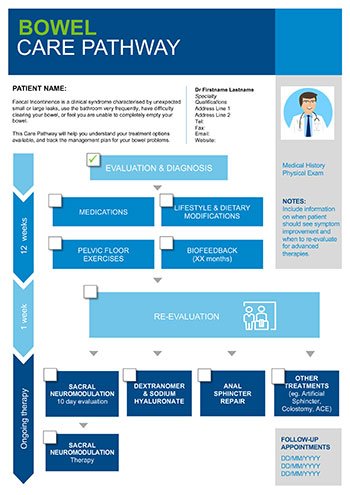 [/vc_column_text][vc_empty_space height=”60px”][/vc_column][/vc_row]